A full spread of the Alnmouth Chapbook outer.
The Northumberland coastline is one of mystery and discovery. And it starts before you get near the sea. That transition space between the land and the sea - the “Strand”. Which is why the Strand in London is so named as the river extended hear before the “Embankment” was built.
At Alnmouth you may look at the sea and sand and discover wonderful wildlife along the windswept and often stretches of beaches. But before you even get to the beach the dunes offer some secrets of their own. Bloody cranesbill shine out from the marram grass and equally burning red are the six spot burnet moths.
Detail of owls and curlew
This chapbook shows the subjects that can be included. I have taken a bit of artistic license (of course!) by adding some nature encounters that I have had over the years. The short-eared owl couples two experiences I have had - one along the Northumberland coast near Holy Island and the other near Allendale. The six owls sitting on the posts were just before the causeway to Holy Island and had just arrived as migrants - perhaps they were resting. The other was near Allendale where the owl seemed to see me from far off and then flew closer and closer and then veered off at the last moment - it was like a scene from a “Bird of Prey Show”.
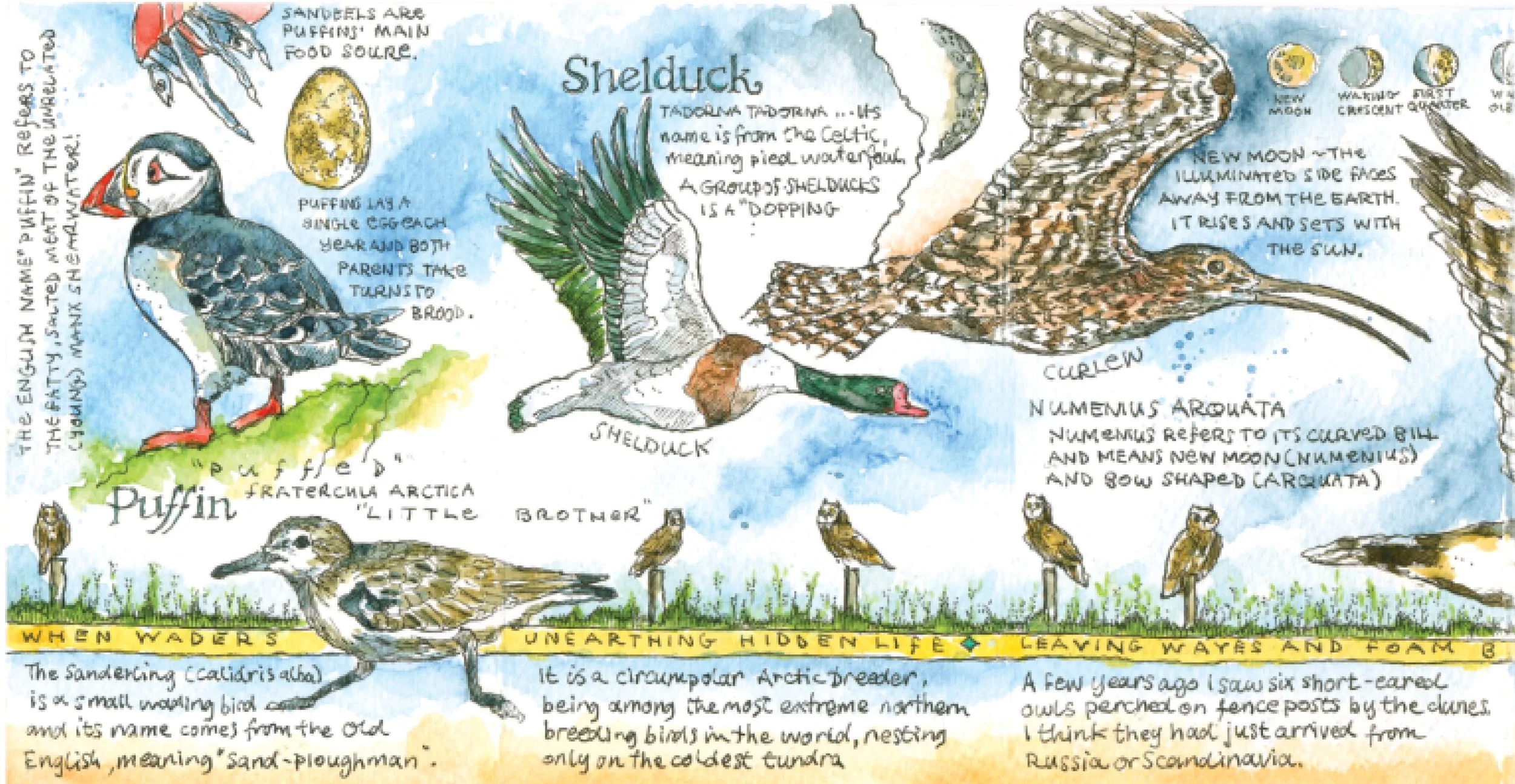
Running sanderling
Also look for the little sanderlings scuttling along the strand line and the lumbering shelduck flying low over the sands. You may not see puffins but to be honest I couldn't leave this little gem out of the picture. And of course Cuthbert’s relationship with otters has to be included.
A full spread of the Alnmouth Chapbook inside.
The notion of adding historical context to a nature journal is valid using the Chapbook Process which I have developed over the years. This gives you permission to have fun and develop a narrative around the place you visit. For me this allows me to have so much fun and allows for some creative expression along with the noticing of nature.
A detail of Cuthbert and his otters.